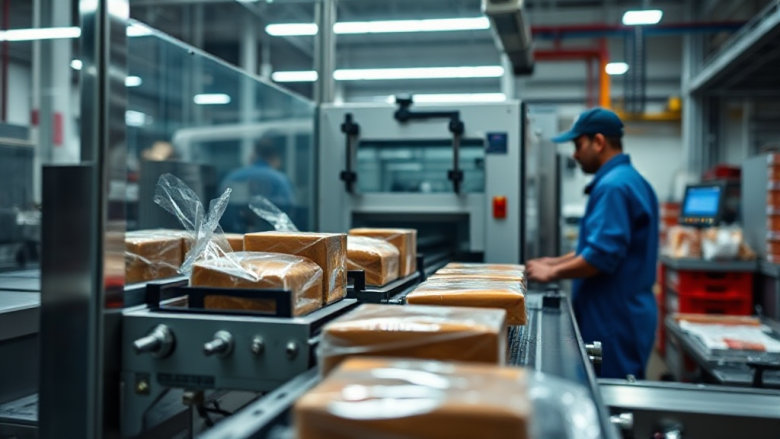
Shelf-Ready Shrink Wrap: How Machine Choice Shapes What Shoppers See
Walk down any retail aisle and watch a shopper’s eyes move. Before they read a label or check a price, they judge the package: is it tight, glossy, and square, or loose, cloudy, and tired? That first glance is often decided not by the product inside but by the wrap around it. A shrink tunnel Machine is the piece of equipment most responsible for that split-second impression, because it controls how film tightens, seals, and reflects light around the pack.
For brand and product teams, the practical question is not simply “which tunnel is fastest?” but “which tunnel, combined with which film, produces the shelf appearance our product deserves?” The answer sits at the intersection of design intent and production reality.
The Shelf Is a Design Brief, Not Just a Destination
Retail shelves are unforgiving. Products are stacked, handled, and lit from above, and every wrinkle or dull patch becomes visible under store lighting. A wrap that looks acceptable in a dim warehouse often reveals flaws under bright shelf LEDs. That is why shelf appearance should be treated as a design brief from the start, not a quality check at the end of the line.
Think about what a shopper actually sees. They see the silhouette of the pack, the gloss of the film, the neatness of the seam, and the way the film hugs corners. A well-tuned tunnel produces a pack that looks engineered—crisp edges, even tension, and a surface that reflects light cleanly. A poorly matched tunnel and film produce the opposite: soft corners, film haze, and seals that look hand-finished.
This is where a Shrink wrapping machine earns its place in the brand conversation. The machine is not a back-office utility; it is the last physical touchpoint before the product meets the buyer. Design-minded teams increasingly treat tunnel selection as part of packaging design, alongside carton structure and label finish.
Film Clarity and Gloss: The First Visual Signal
Film does most of the visual work in shrink packaging. Clarity determines how much of the product shows through, and gloss determines how the pack catches light. A high-clarity film lets color and texture read accurately, while a glossy finish adds perceived value—especially for premium or gift-oriented goods.
The tunnel’s role is to bring out that potential without distorting it. Temperature, airflow, and conveyor speed all influence how the film relaxes and tightens. Too much heat can create haze or thinning; too little leaves the film baggy and dull. The right tunnel distributes heat evenly so the film reaches its ideal shrink state across the whole pack, not just the side facing the heating elements.
Matching Film to Tunnel Behavior
Different films respond differently to the same tunnel settings. Polyolefin films tend to offer softness and clarity, while PVC films shrink at lower temperatures and can deliver a tighter, glossier finish but with different sustainability trade-offs. The tunnel must be adjustable enough to accommodate the film the brand has chosen for its look and its environmental commitments.
This is a common point of friction between design and production. Design wants a particular gloss or transparency; production wants a film that runs reliably at line speed. The resolution is usually found in a tunnel with precise temperature zoning and variable conveyor speed, so the same machine can handle a premium cosmetic pack and a utilitarian multipack without compromising either.
Seal Neatness and the Details Shoppers Notice
Seals are the detail that separates a professional pack from a homemade one. A clean seal is straight, consistent, and free of bubbles or scorch marks. It sits flat against the pack and does not curl or wrinkle. Shoppers may not consciously inspect a seal, but they register its absence of quality when it is messy.
Seal quality depends on the sealing system as much as the tunnel. A Automatic Shrink Wrapping machine that combines a precise sealing bar with a well-calibrated tunnel produces repeatable results, pack after pack. Manual or poorly maintained systems introduce variation, and variation is what shoppers read as cheapness.
Why Consistency Beats Perfection
A single perfect pack on a shelf proves nothing. Shoppers compare packs side by side, and inconsistency is more noticeable than a slightly lower average quality. If one pack is tight and another is loose, the shelf looks disordered even if both are technically acceptable. Tunnel choice should therefore prioritize repeatability: the ability to produce the same seal and the same shrink tension across an entire production run.
This is also where maintenance and operator training matter. A tunnel that is cleaned and calibrated regularly will hold its settings far better than one left to drift. For brand teams, it is worth asking whether the machine’s design makes routine calibration straightforward, because that directly affects how the product looks in month twelve of a production cycle.
Balancing Looks With Line Speed and Cost
Every appearance decision has a production consequence. Higher gloss films and tighter shrinks often require slower conveyor speeds or more careful temperature control. That can reduce throughput, which matters for high-volume lines. The art is finding the tunnel settings and film combination that deliver the shelf look the brand needs without sacrificing the line speed the business needs.
A useful way to think about this is in tiers. Premium products justify slower speeds and higher-cost films because the shelf impression carries more of the selling burden. Everyday staples can accept a slightly less glossy finish if it keeps costs and speed competitive. The tunnel should be flexible enough to serve both tiers, ideally with saved settings for each product family.
It also helps to compare tunnel types honestly. Small batch producers may find a compact tunnel sufficient, while high-volume operations need wider tunnels, faster conveyors, and more robust heating systems. The table below summarizes the trade-offs at a high level.
| Consideration | Compact Tunnel | High-Speed Tunnel |
|---|---|---|
| Best for | Small batches, varied products | High-volume, consistent products |
| Appearance control | Good with careful tuning | Excellent with saved recipes |
| Throughput | Moderate | High |
| Film flexibility | Limited range | Broad range |
The final decision should be made with samples in hand. Run the actual film and the actual product through candidate tunnels, then look at the output under shelf-like lighting. What looks right in a workshop often looks different in a store. The machine that produces the pack you want shoppers to see is the one worth choosing.
In the end, shelf-ready shrink wrap is a design outcome, and the tunnel is the tool that delivers it. When appearance expectations are set early and matched to machine capability, the result is a pack that earns the shopper’s second glance—and the sale that follows.